
 English
 Deutsch
 Français
 中文
中文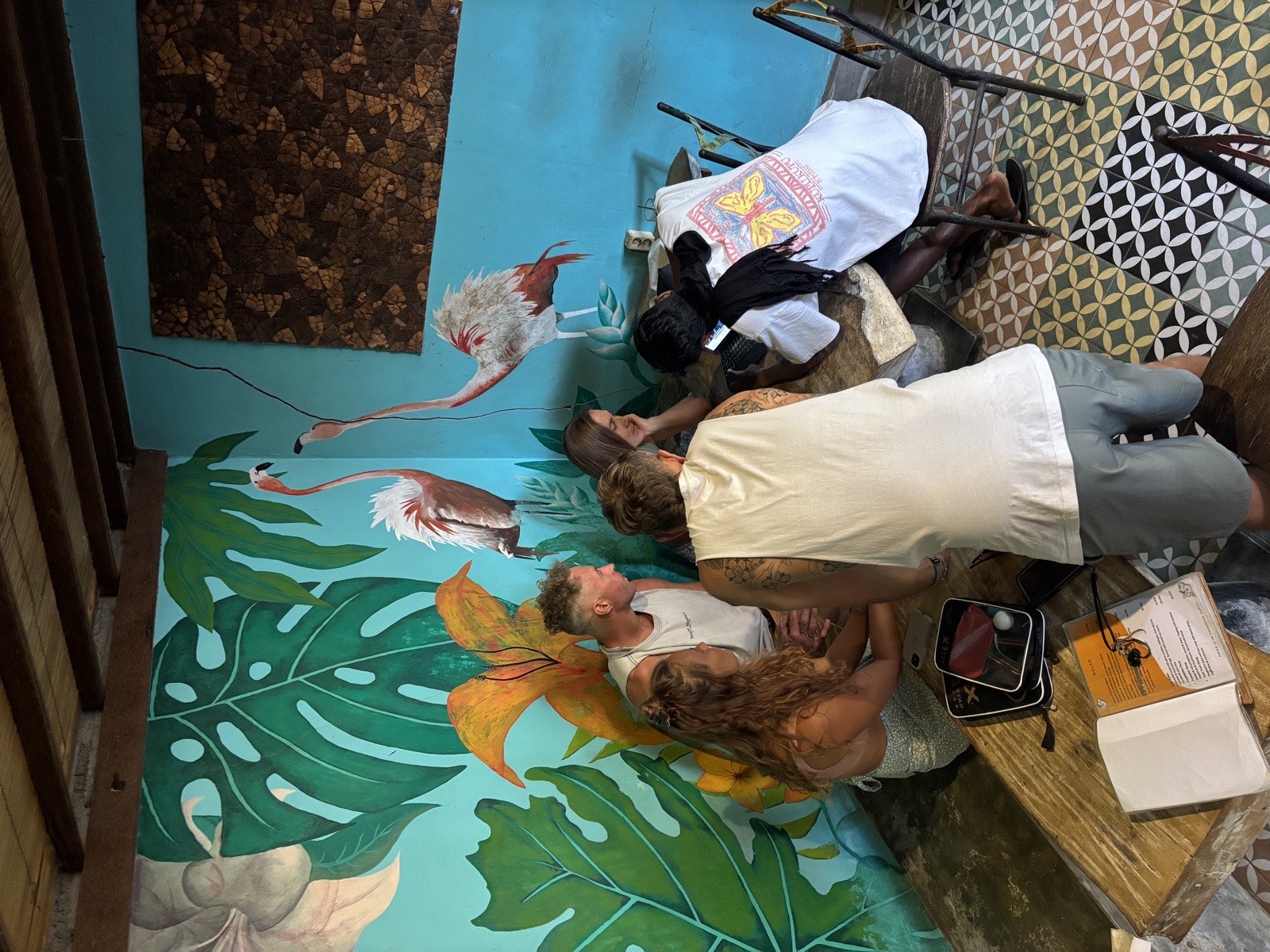
Ask a surfer what happened on their last wave and you will get a description of what it felt like. Show them the footage and there is usually a pause, and then: that is not what I thought I was doing.
That gap is the single most expensive thing in surfing. You can spend years correcting a problem you do not actually have, because the one you do have is invisible from the inside.
Why surfing alone is a slow teacher
Practice works when you repeat something and find out whether it worked. Surfing breaks both halves of that. Every wave is a slightly different problem, so you are never quite repeating. And the feedback arrives as a feeling, not as information.
Worse, faults travel. A top turn that will not come around is usually not a top turn problem. It started in the bottom turn, or in a pop-up that put your feet in the wrong place before the ride even began. Watching only the moment where it went wrong tells you almost nothing.
What a coach is actually looking at
Not whether the wave was good. Usually not even the turn you are asking about. The things that decide most rides are earlier and duller:
- Where your eyes go. The most common fault we see, at every level. Look at the beach and the board goes to the beach.
- The pop-up. Whether it is one movement or several, and where your feet land. Half of all turning problems are foot placement problems.
- Bending at the knees or at the waist. On video the difference is obvious. In the water it feels identical.
- What the back arm does. It gives away your rotation before your body does.
- When the bottom turn starts. Almost everyone rushes it. On footage you can count the frames.
One change per session
The temptation after watching footage is to fix everything. That reliably produces a worse surfer for a week.
So we pick one thing. Not three, not a list. One change, phrased so you can hold it in your head on a wave: look at the end of the wall. Wait half a second longer. Land your back foot over the fins. Then you paddle out and test it, and we film that.
How a day works
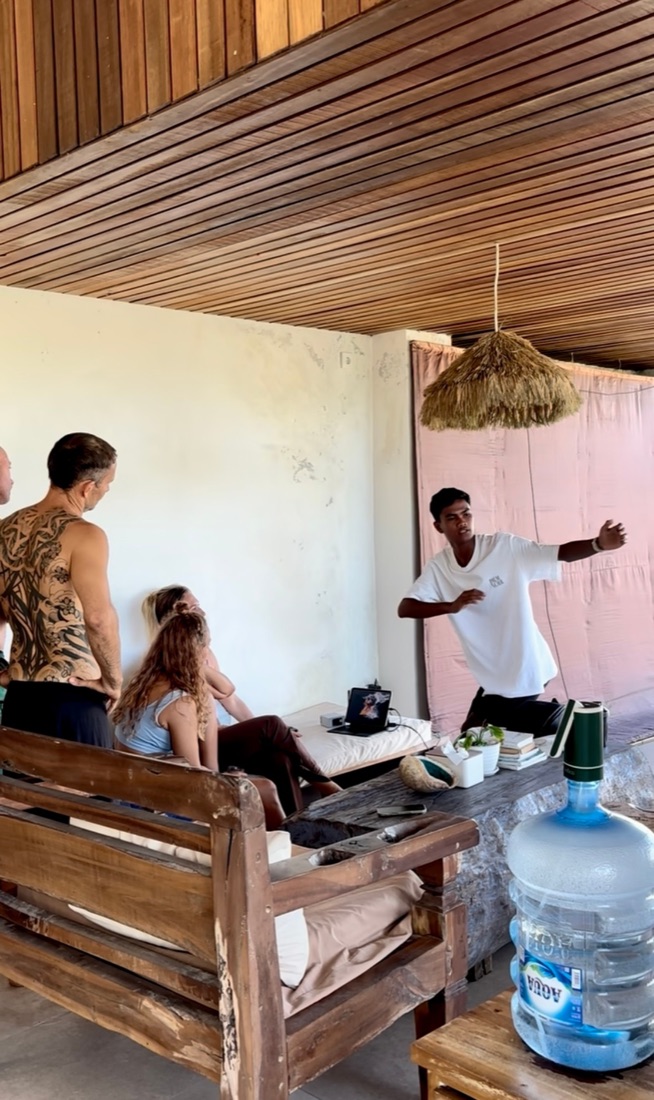
Film in the morning, when the wind is still offshore and the waves are worth filming. Watch it over coffee afterwards, on a proper screen rather than squinting at a phone on the sand. Take one change into the afternoon session.
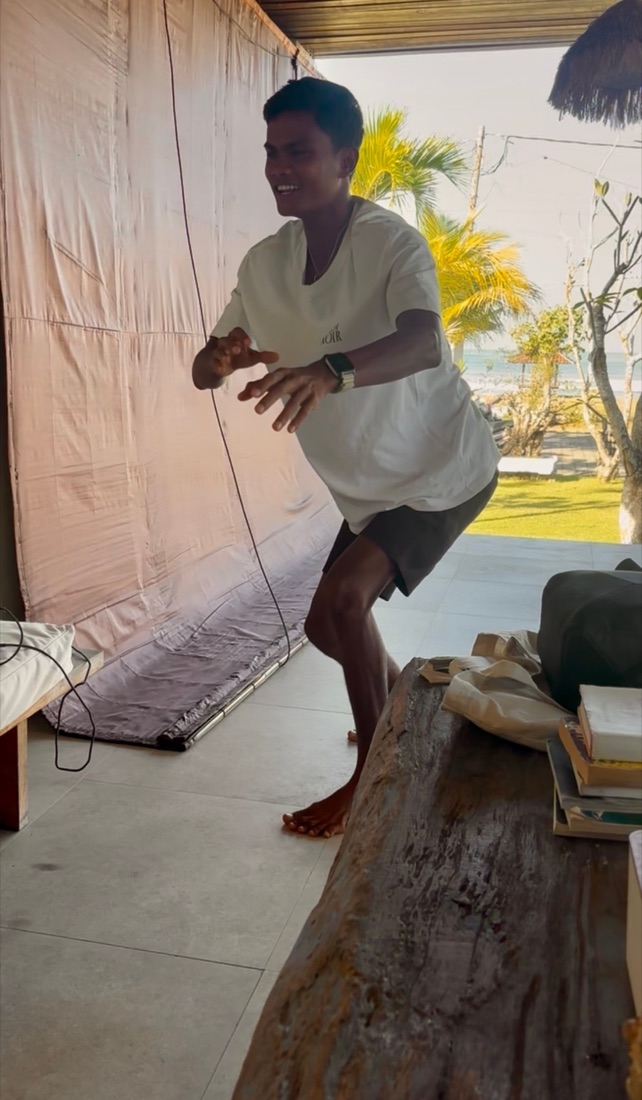
Between the two, the correction usually gets rehearsed on dry land, on the sand or on a surfskate, where you can repeat the movement thirty times instead of waiting for thirty waves.
That loop, morning to screen to afternoon, is worth more than any single piece of advice in it.
What it is not
It is not a judgement of your surfing, and nobody watches your wipeouts in slow motion for entertainment. It is also not a highlight reel, although you do keep the footage, and most guests leave with the first clips of themselves surfing that they have ever had.
And it is not only for good surfers. That is the most common misunderstanding. Beginners get the most out of it, because their faults are the largest and the easiest to fix. An advanced surfer might be hunting for a few degrees of rotation. A beginner usually finds out that their pop-up has been costing them every wave since day one.
Quick answers
Do I need to be able to surf to get something out of video analysis? No. Beginners often gain the most, because the corrections are bigger and more obvious.
How is the footage filmed? From the beach or the point, which is enough to read technique. On the right day we shoot from the water.
Do I get to keep the videos? Yes. They are yours.
How often is it worth doing? Once or twice a week is plenty. Between sessions you need time in the water to work on what you saw.
Is it included in the coaching? It is part of how we coach rather than an add-on. See intermediate coaching or, if you are starting out, beginner lessons.
Curious what your own surfing looks like from the outside? Tell us your dates. It is usually one thing, and it is usually not the thing you think.