
 English
 Deutsch
 Français
 中文
中文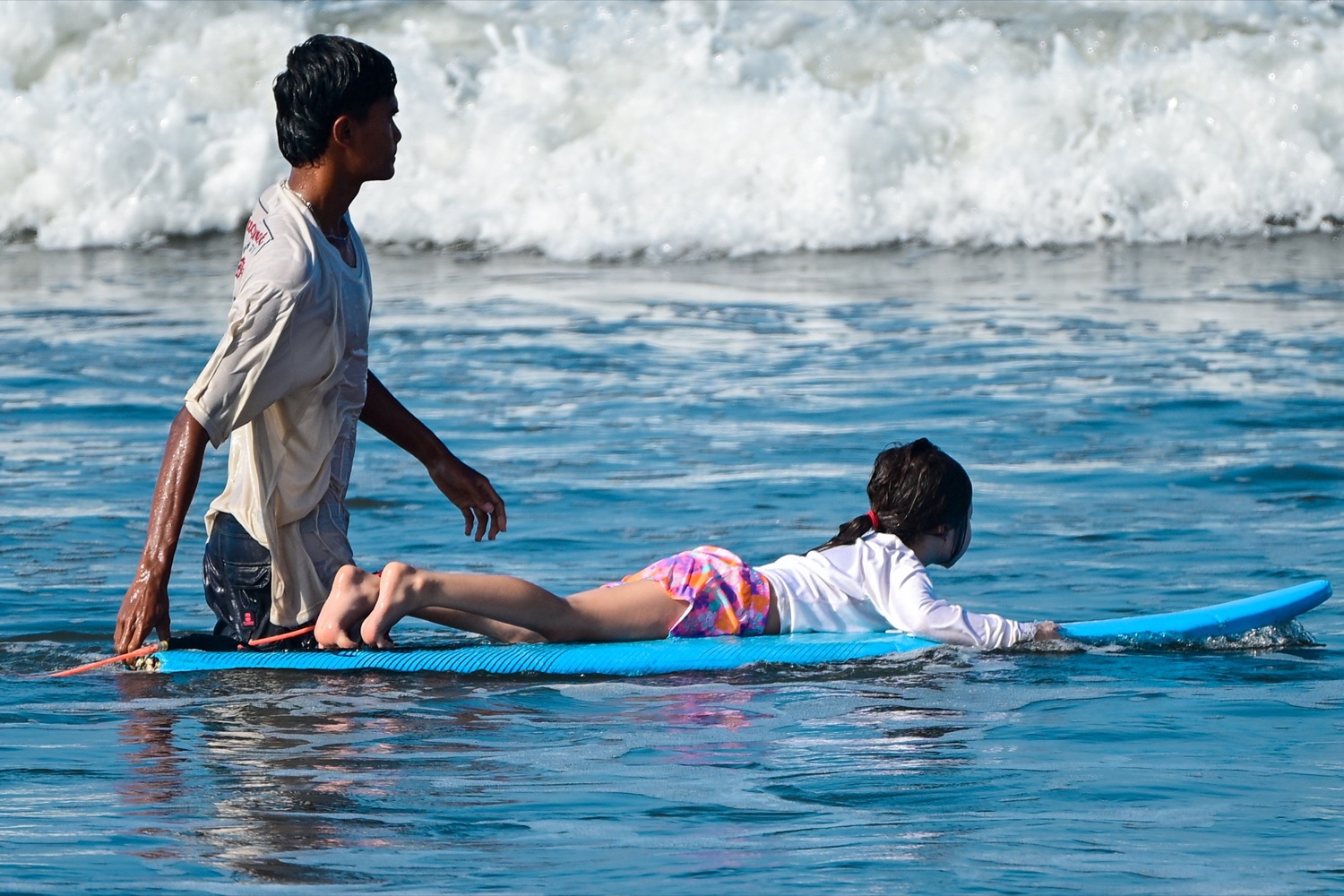
Parents ask us two questions about surf lessons, and they are not the same question. The first is whether it is good for their child. The second, asked more quietly, is whether it is safe.
Both deserve a straight answer, so this is written for parents rather than for children, and it includes the things we would want to know if we were booking a lesson for our own.
When is a child ready?
Age is the weakest indicator there is. We teach from five, and some five-year-olds take to it immediately while some nine-year-olds need three sessions before they want to go past their knees. Neither is a problem. What actually matters is simpler:
- Is your child comfortable in water? Not skilled, comfortable. A child who likes water will learn to surf. A child who is frightened of it will learn that surfing is frightening.
- Can they swim? We ask that they can. Our lessons take place in shallow, standable water, but it is still the ocean, and a child who panics in water over their head is in a different situation entirely. Swimming first, surfing second.
- Do they want to? A child who has been signed up as a surprise usually spends the first hour deciding whether to forgive you.
What children actually get out of it
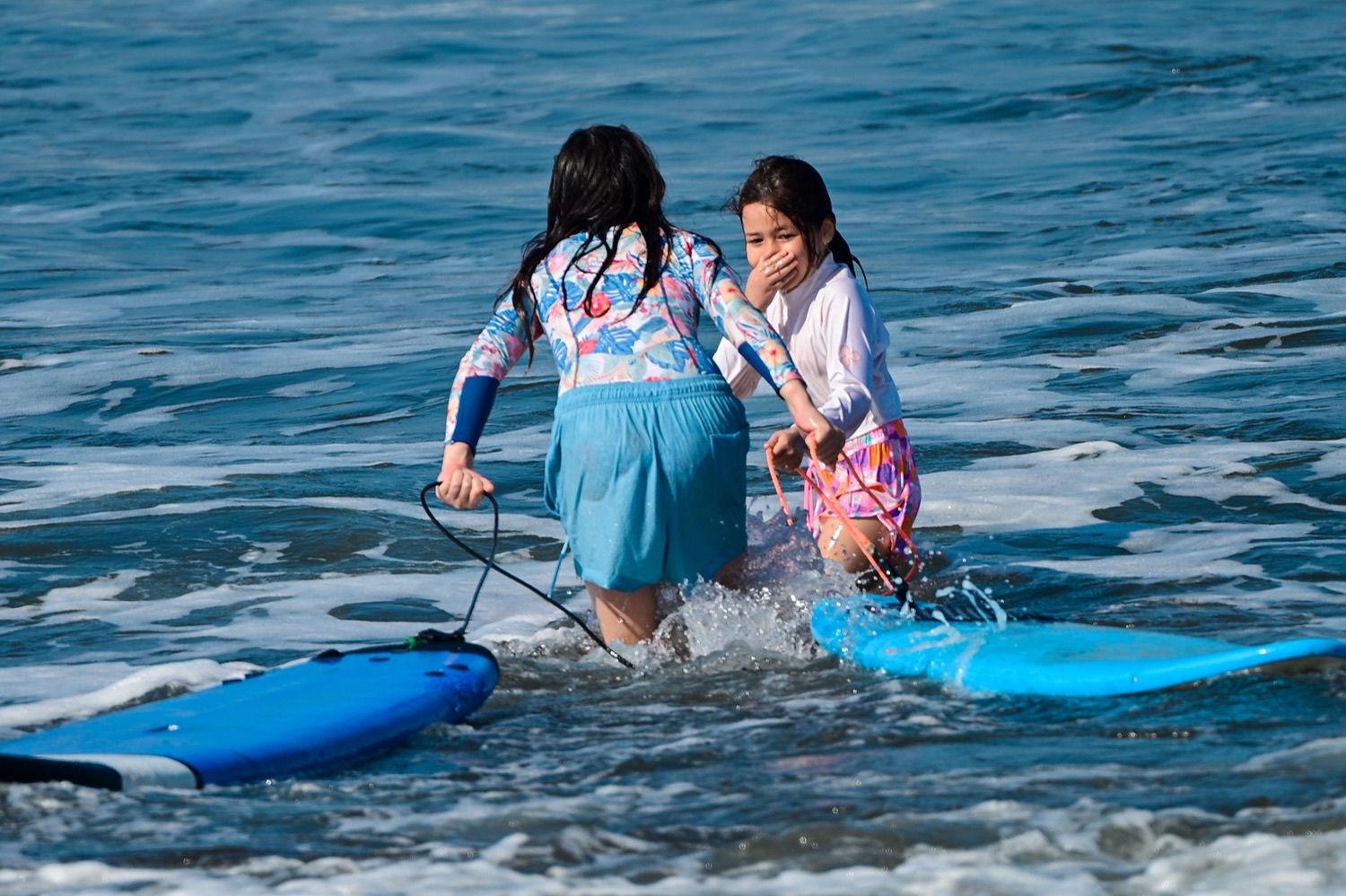
We will keep this honest, because the claims in this corner of the internet get silly. Surfing will not fix anything. What it does give a child is genuinely useful, and most of it has nothing to do with surfing.
- Water competence. Reading waves, understanding what the ocean is doing, knowing when to get out. In an island country, and on any beach holiday for the rest of their life, this is a safety skill rather than a hobby.
- A productive relationship with failing. Surfing is mostly not catching the wave. A child who spends two hours falling off and keeps paddling back is practising something that transfers to everything else.
- Attention without a screen. Two hours in which there is nothing to look at but water, and nothing to do but try again.
- Confidence they earned themselves. The first wave a child rides is the first thing many of them have done that no adult did for them. You can see it on the beach afterwards.
What to look for in a kids' surf lesson
This is the part worth reading twice, because the differences between surf schools are much bigger than their websites suggest. Six things to check, wherever in the world you book.
- How many children per coach?This is the whole question, and everything else is detail. One coach watching six children in moving water cannot watch any of them. We teach every child one-to-one, and since 2026 the Medewi lineup rules cap any instructor at two students in total. Ask the number before you ask anything else.
- Where does the lesson happen?It should be water your child can stand up in, on a forgiving bottom, away from the main lineup. If a school cannot tell you exactly where the lesson takes place, that is an answer in itself.
- Who is watching while they are in the water?The coach should be within arm's reach for a beginner, not calling instructions from the beach. And you should be able to watch the whole thing from the sand.
- Is the equipment the right size?A child on an adult softboard is fighting the board instead of learning. Proper kids' boards are shorter, lighter and narrower, and a child can actually carry one, which matters more than it sounds.
- Are they being taught or just pushed?Being pushed into whitewater over and over is fun for an afternoon and teaches almost nothing. By the end of a good first lesson a child should understand what they did, not just that it happened.
- What happens on a bad day?Some days a child is tired, or cold, or has decided today is not the day. The right answer is a break on the beach, a change of plan, or an early finish, not a coach insisting on getting the hour's worth.
What a lesson actually covers
A good kids' lesson is not two hours of being pushed into waves. Roughly in this order:
- The ocean, before anyone gets in it. How waves form and break, where it is safe to be, which water to stay out of, and how to tell when it is time to come in. Children who understand what the sea is doing are calmer in it, and this is the part that stays useful long after the holiday.
- The board. How to carry it without it carrying them, where to lie on it, and how to fall away from it rather than onto it. All of this happens on the sand, before a wave is involved.
- Paddling. Where the body sits, what the arms do, and how to tell that a wave is coming. Paddling is unglamorous and it is the difference between catching five waves and twenty.
- The pop-up. Practised on dry sand until it stops being a sequence of separate movements, then guided wave by wave in the water, with one correction at a time rather than a list.
- Riding. The coach picks the wave, which matters more than people think, and the child does the rest.
Sharing a lineup comes later, and at Medewi it comes with real rules behind it rather than etiquette theory.
What a first lesson really looks like
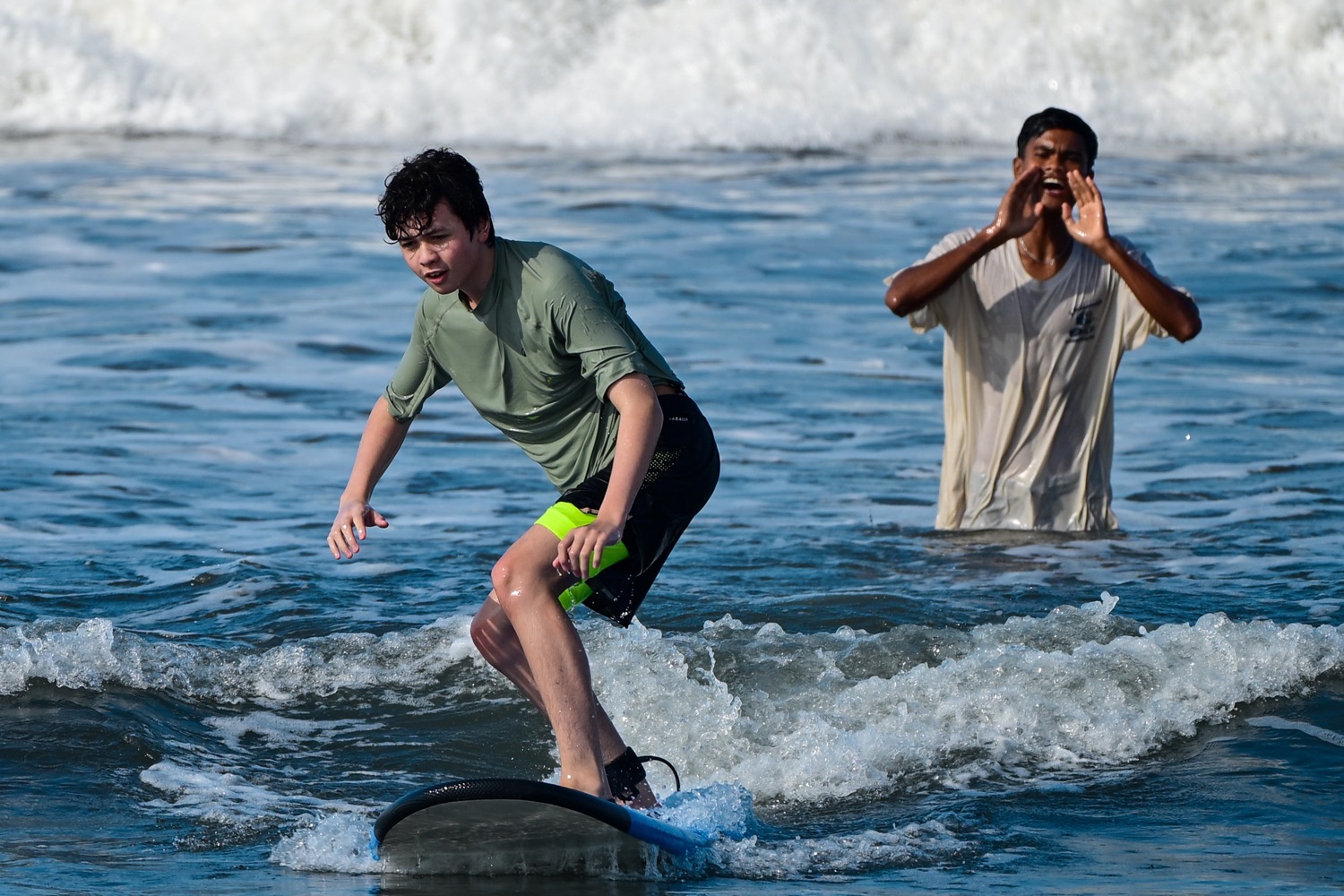
Ours run about two hours, the same as an adult lesson. That number is misleading, though, because the time is spent completely differently.
With a child, the lesson moves at whatever pace the child sets. There is time on the sand first. There are breaks whenever they are needed, and with the younger ones they are needed often. Some of the two hours is sitting on the beach talking about what just happened, and that is not wasted time, it is where most of the learning sticks.
A realistic first session: some dry-land practice, a long while getting used to the water, a number of whitewater waves on their stomach, and if it is going well, standing up. Some children stand on day one. Some stand on day three and then never fall off again. Both are completely normal.
What parents get wrong
Said with affection, because we see all of these every season.
- Coaching from the beach. Your child now has two instructors giving different advice, and will listen to neither.
- Comparing siblings. The quicker one is not the better one, and the slower one can hear you.
- Filming everything. One or two waves, then put the phone down. Children perform differently when they are being recorded, and not better.
- Pushing through a bad day. One forced session can cost you a year of a child wanting to go back in.
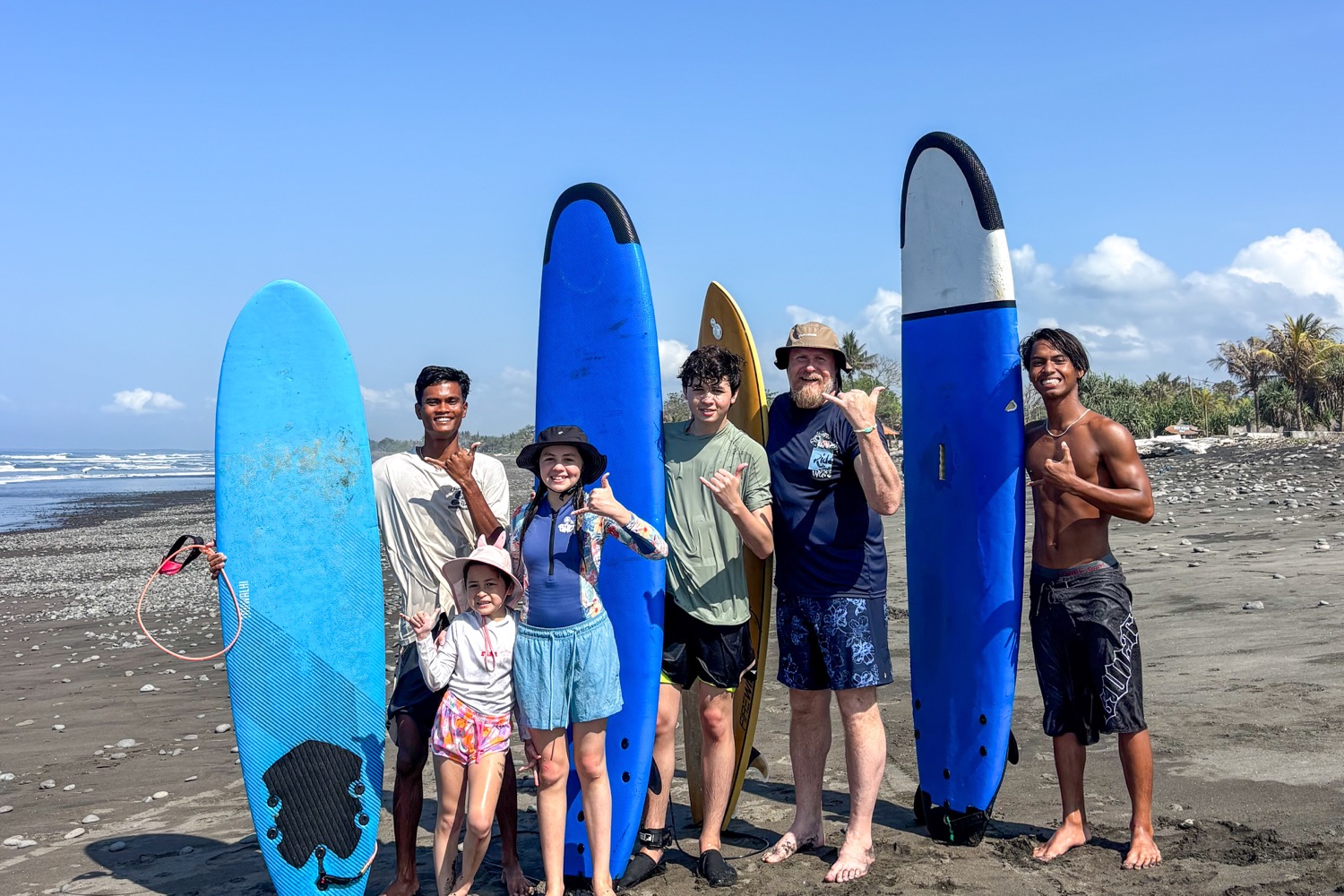
Why Medewi suits children
Not every surf spot is a reasonable place to put a beginner, let alone a small one.
Medewi is a soft, rolling left that breaks a long way out and runs for hundreds of metres, which means the inside section where children learn is gentle, shallow and a long way from anything serious. The water sits between 27 and 29 °C all year, so nobody gets cold and nobody needs a wetsuit. And the lineup is quiet: no jostling, no dropped-in-on beginners, no surf-school buses. We compared the two worlds directly in Medewi versus Canggu.
Since 2026 the village has its own lineup rules, written by the local board riders: beginners stay on the inside with a registered instructor, and no instructor takes more than two students. We thought that was the best thing to happen here in years, and for families it matters more than for anyone. The rules are set out in full in our complete guide to Medewi.
Quick answers
What age can a child start surfing?
We teach from five. Comfort in water matters far more than the number.
Does my child need to be able to swim?
We ask that they can. Lessons are in standable water, but it is still the ocean.
How long is a kids' surf lesson?
About two hours, paced to the child, with as many breaks as they need.
Do you have boards for children?
Yes. Proper kids' boards, sized so a child can handle one themselves.
Can I watch?
Yes, from the beach. The lesson happens in front of you, in shallow water.
What should my child bring?
Swimwear, a towel and sunscreen. Board, leash and rash guard are included, and no wetsuit is needed. The rest is in our Bali packing list.
Will my child stand up on the first day?
Many do. Some do not, and it means nothing. The children who stand on day three often turn out to be the ones who keep surfing.
Thinking about it for your own? Have a look at our kids surf lessons, or just tell us your child's age and we will be honest with you about whether it is the right week for them.