
 English
 Deutsch
 Français
 中文
中文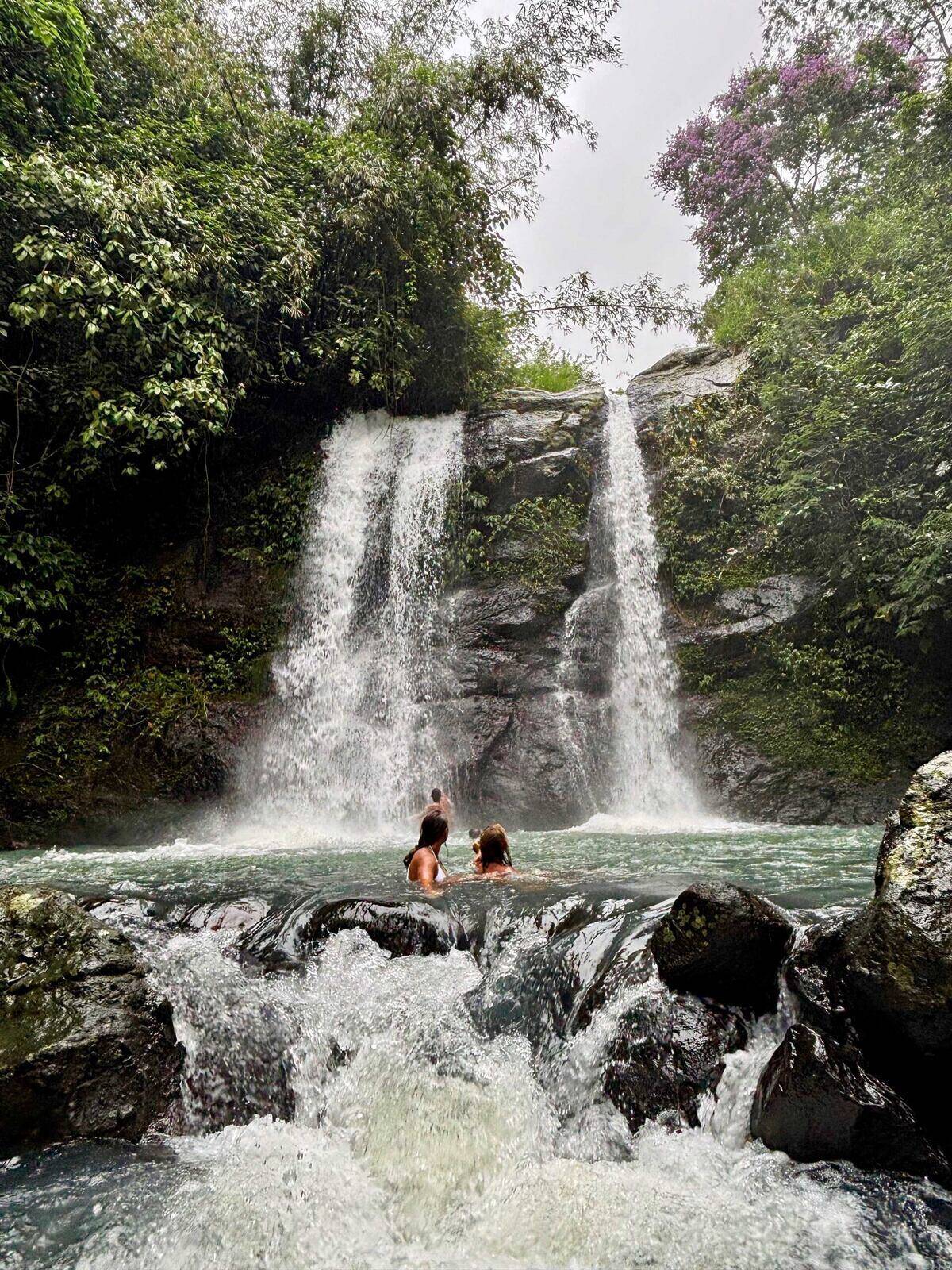
Every year, somebody messages us in October to ask whether they should cancel their January trip. The rain, the wind, the stories about brown water in Canggu. Our answer is almost always the same: don’t cancel, change your expectations and your alarm clock.
The wet season is our quiet season. It is also when a lot of our favourite first waves, longboard sessions and empty mornings happen. Here is what November to March actually looks like on Bali’s west coast, from the people who surf it every day.
What actually changes in the wet season
Bali has two surf seasons, and the difference is mostly about wind. From April to October the southeast trade winds blow steadily for months. From roughly November to March they give way to the monsoon, which comes from the west and northwest and changes its mind far more often from day to day.
The swell keeps coming. The Indian Ocean does not switch off. Swells are usually smaller and less consistent than in the dry season, and flat spells of a few days do happen, but there is surf for most of the season.
The rain comes in bursts. A wet season day in Bali is rarely a grey day from start to finish. Showers tend to be short and heavy, often in the afternoon or overnight, with plenty of sunshine in between.
The water stays warm. Around 27 to 29 degrees all year. You still surf in boardshorts or a bikini and a rash vest.
The island goes green. Rice fields fill, rivers run, waterfalls get loud. If you have only ever seen Bali in August, the wet season looks like a different island.
Which coasts work, and which don’t
Wind direction decides everything. The westerly monsoon blows onshore on most of Bali’s west and southwest coast, which is why the famous dry season breaks get messy in the afternoons. The same wind blows offshore on the east coast, and that is where the travelling crowd moves: Keramas, Sanur and Nusa Dua come alive between November and March.
That shift is useful to know for two reasons. If you are an experienced surfer based in the south of Bali, the east coast is your wet season playground. And if you are not, the crowds follow the good east coast waves, which leaves the west coast even quieter than usual.
And Medewi?
Honestly: Medewi is a morning wave in the wet season. The monsoon wind tends to come up later in the day and puts texture on the point, so the plan is simple. Surf early.
What you get in those early hours is often lovely. Smaller, softer walls peeling down the point, glassy water, and a lineup you can count on two hands. For beginners this is a gift: slower waves, more time to stand up, fewer people to dodge. For longboarders it is the season of long, relaxed trim lines, and our guide to longboarding in Medewi explains why the point suits it so well.
Two honest caveats. After very heavy rain the rivermouth can muddy the water for a day or two. And a run of small days is part of the deal. We plan around both, and the tide matters just as much as in the dry season: mid to high tide is still the friendliest time to be in the water. You can check the next few days on our live Medewi surf report.
If you are an advanced surfer chasing size, be realistic. June to August is your window, and the same dry season swells also light up G-Land, one ferry ride away. The full year at a glance is in our guide to the best time to surf Medewi.
What a wet season day looks like here
Coffee at first light and a look at the point. In the water while it is still glassy. Breakfast, then video review of the session while the clouds build. When the afternoon rain rolls through, it is time for the other half of Medewi: a waterfall in the hills, the sea temple at Rambut Siwi, or a long lunch with nothing to do. Our experiences page collects the ones we love, and a perfect day in Medewi strings them into a full itinerary.
By late afternoon the rain has usually cleared, and on a good day there is an evening session on the table too.
The months, one by one
November and December: the changeover. Some days still feel like dry season, others bring the first big showers. The Christmas and New Year weeks are busy across Bali, so book early if your dates fall there.
January and February: the heart of the wet season. The most rain, the fewest surfers, and the best chance of having a morning at the point almost to yourself.
March: things start to settle, and the swell begins to wake up again. Look up the date of Nyepi, the Balinese Day of Silence, before you book: for one day the whole island stops, the airport closes and nobody goes to the beach. It is an extraordinary thing to experience, as long as it doesn’t catch you by surprise.
Beyond Bali in the wet season
If you want guaranteed variety, look east. South Lombok is one of the few genuinely year-round surf destinations in Indonesia, and its sheltered bays keep delivering fun, uncrowded waves through the wet season. Our Lombok surf trip leaves from Medewi and runs all year.
What to pack and plan
A light rain jacket, a rash vest (cloud cover does not stop the tropical sun), and a bit of flexibility. The wet season rewards people who surf when the ocean says so rather than when the calendar does. That is exactly what coaching with someone local is for: we check the conditions every morning and put your sessions in the best window of the day. You will find everything on our surf coaching page.
Quick answers
Is it worth surfing Bali in the wet season? Yes, if you surf early and stay flexible. The swell keeps coming, the water stays warm and the lineups are the quietest of the year.
When is the wet season in Bali? Roughly November to March, with January and February the wettest months.
Is Medewi good in the wet season? In the mornings, yes. The waves are smaller and softer, which suits beginners and longboarders. Later in the day the monsoon wind usually messes up the point.
Where are the best waves in Bali in the wet season? The east coast, around Keramas, Sanur and Nusa Dua, where the westerly monsoon blows offshore. These are mostly waves for experienced surfers.
Does it rain all day? Rarely. Showers tend to be short and heavy, often in the afternoon or overnight, with sunshine in between.
Is the wet season good for learning to surf? It is one of the best times. Softer waves and empty lineups mean more time on your board and less stress in the water.
Planning your dates? Ask us directly. We are in the water every morning, whatever the season.