
 English
 Deutsch
 Français
 中文
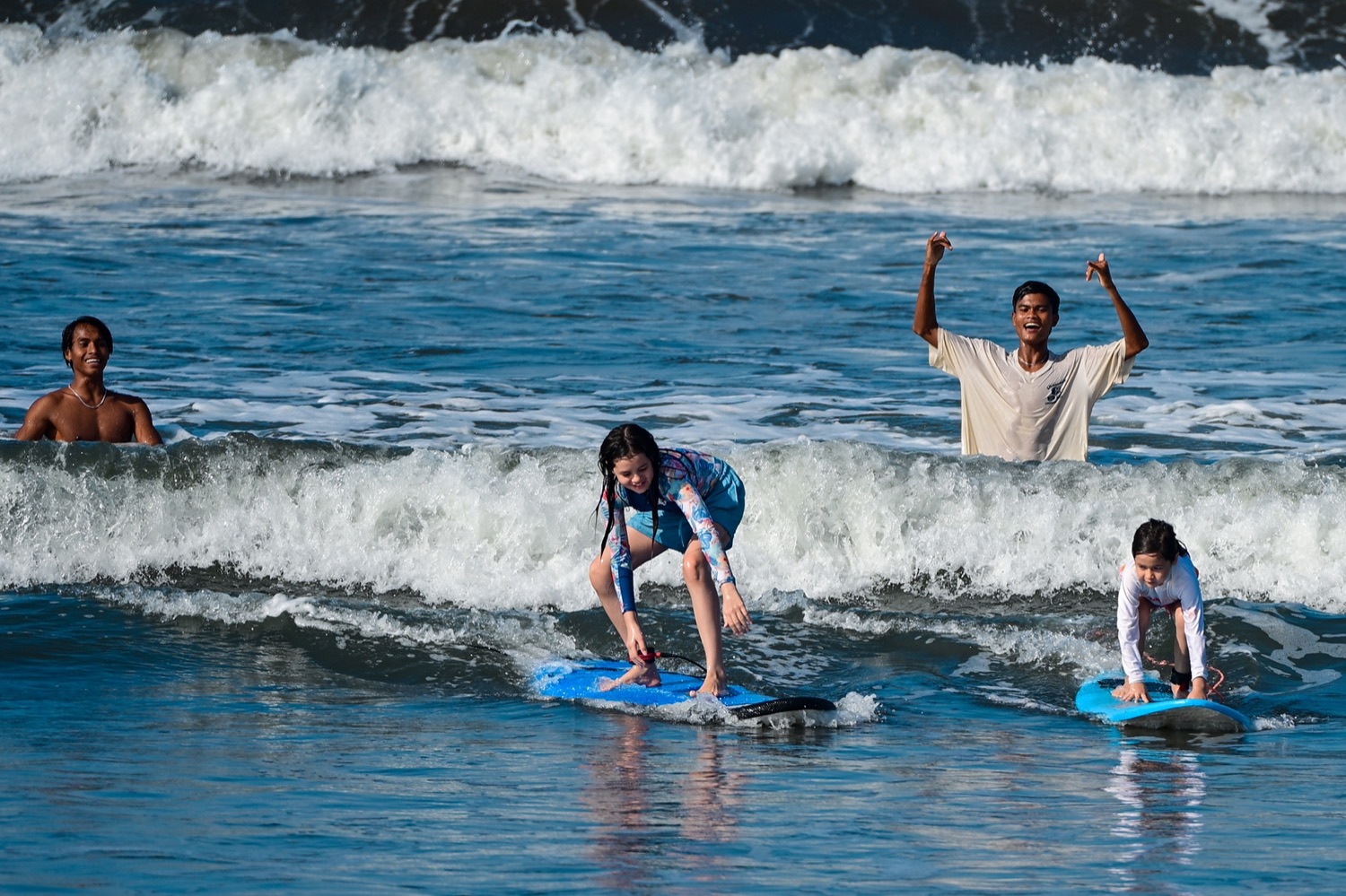
People tell me their level before a session. They tell me how many days they have, what they want to work on, which board they like. The thing they almost never tell me, until I ask, is that they are frightened.
I ask now. Not in a serious way, just on the sand before we go in: is there anything out there you do not like? Almost everyone has something.
There is no list
I used to think I could guess. I cannot.
One person is frightened of the size. The next one does not care about size at all but cannot stand not knowing what is underneath. Somebody else is fine with the wave and frightened of the people, of being in the way, of looking like they do not belong. And some people carry something that happened to them somewhere else, years ago, and it is still with them.
Every one of those needs something different from me. That is the whole reason I ask instead of assuming.
I had mine
On my surf trip to Desert Point the waves were big and fast, and everything happened sooner than I expected it to. I had fear out there, although if I am honest the better word is respect.
That distinction matters, because respect does not go away and it should not. What changed for me was never the feeling itself. It was knowing what to do with it: go on the smaller days first, sit and watch a while before paddling out, and accept that some days are not my days. Nobody talked me into that, and it did not happen in one session.
The week we did not surf on the first day
A guest came to us last season for a week of coaching. She was a solid intermediate surfer. She could surf better than she thought she could.
On her last trip, somewhere else, something had happened to her in the water. She did not go into detail and I did not ask. What mattered was what I could see on the first morning: she did not want to go in.
So we did not surf.
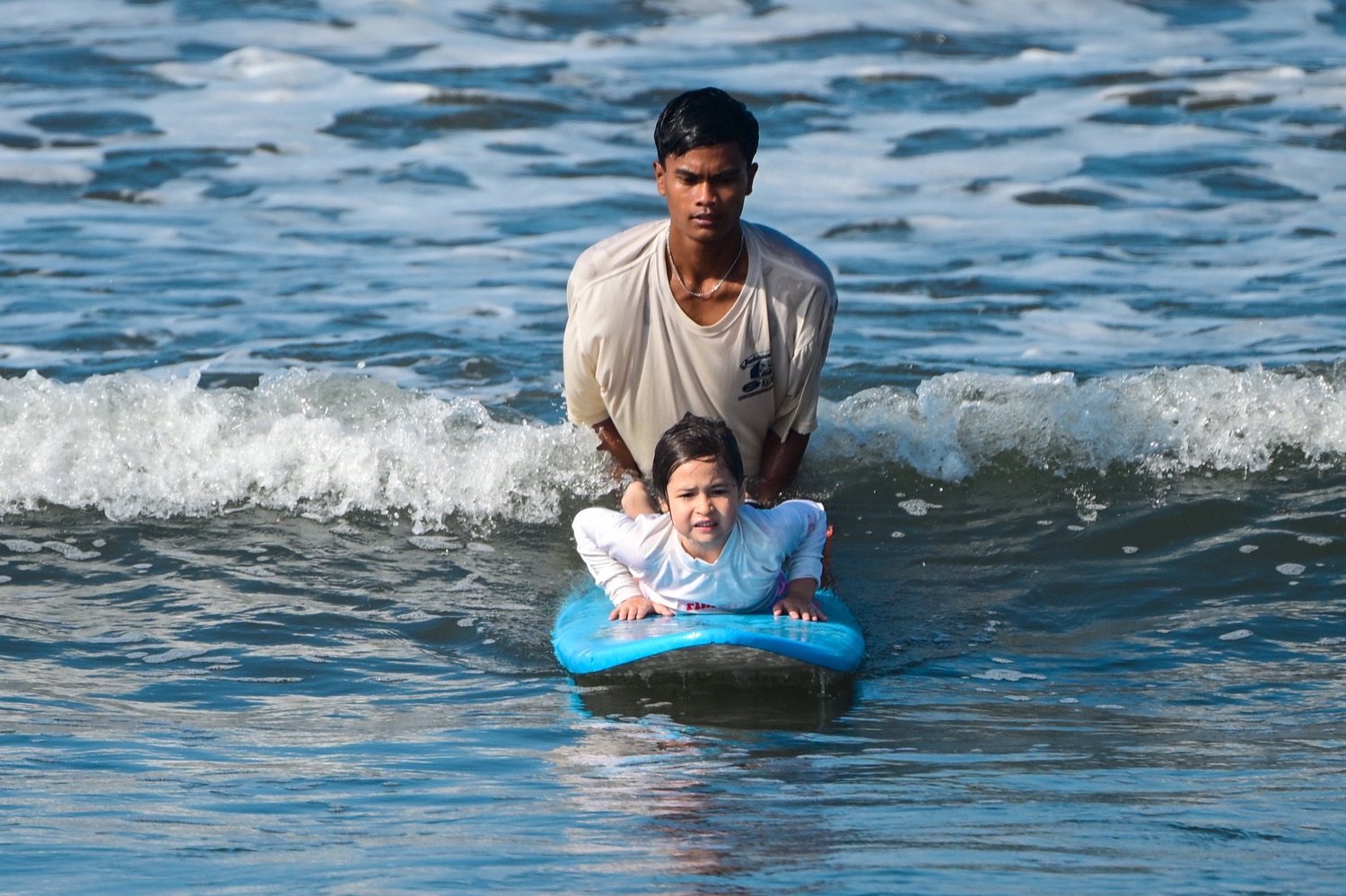
We walked into the shallows together, the small stuff near the shore where you can stand the whole time. She lay on the board. That was the session. No waves, no pop-up, nothing to achieve. Just time in the water, with somebody next to her, where nothing happened.
The next day we paddled for the small ones, and she rode them lying down, bodyboarding the whitewater on her stomach. No standing up. Again: nothing to achieve.
A few days later she was surfing waves again.
I am not going to tell you I fixed anything, because that is not what happened and I do not think a surf lesson can do that. All I did was give her a week of small, calm sessions where the ocean did not do anything frightening, and her body drew its own conclusion.
Why the small steps are the point
You cannot talk somebody out of being frightened. I have watched a lot of people try, usually with a very confident voice and the words just go, you will be fine.
Fear gets built out of an experience. It comes apart the same way: with other experiences. Every calm session in the water is a piece of evidence against it, and you need a few of those before anything changes.
It works in the other direction too. One session where somebody gets pushed into a wave they did not want is evidence for the fear, and it can cost a year.
This is the real reason I coach one to one
If today needs to be a shallow-water day, it can be a shallow-water day. Nobody is waiting. There is no group on a schedule, no six other people watching from the lineup, nothing to get through before the session is over.
That is not a small thing. Most of the time, when somebody tells me they are frightened, what they actually need is permission to go slowly, and somebody whose only job that morning is to be next to them.
I take a lot of time with my guests. That is not patience as a personality trait, it is just the thing that works.
What makes it worse
- Being pushed. Including by yourself.
- Going too big too early. You do not learn courage that way, you learn that the ocean is not safe.
- A crowded lineup. Feeling watched turns a manageable fear into a bad morning.
- Staying out of the water after a scare. The longer the gap, the bigger the thing becomes in your head.
If you are the one who is frightened
- Say it out loud to your coach, before the session. It changes the entire plan, and nobody is going to think less of you. Most people are relieved when somebody says it first.
- Go smaller than you think you need. You can always go bigger in the afternoon.
- Go back soon. Days, not months.
- Pick a forgiving wave for the first sessions back. A soft one, over a soft bottom, without a crowd.
- Do not set a goal for the day. Being in the water is the goal.
Fear does not disappear when you get good
I want to be honest about this, because a lot of surf schools suggest otherwise.
Better surfers are not fearless. They are frightened at different sizes, in different places. What changes is the relationship: you learn which feeling is your head making things up, and which one is real information you should listen to.
That second one matters. Sometimes the fear is right. If everything in you says do not paddle out today, that is worth obeying. Nobody out here is impressed by somebody who went anyway and had to be helped back in.
Why this place helps
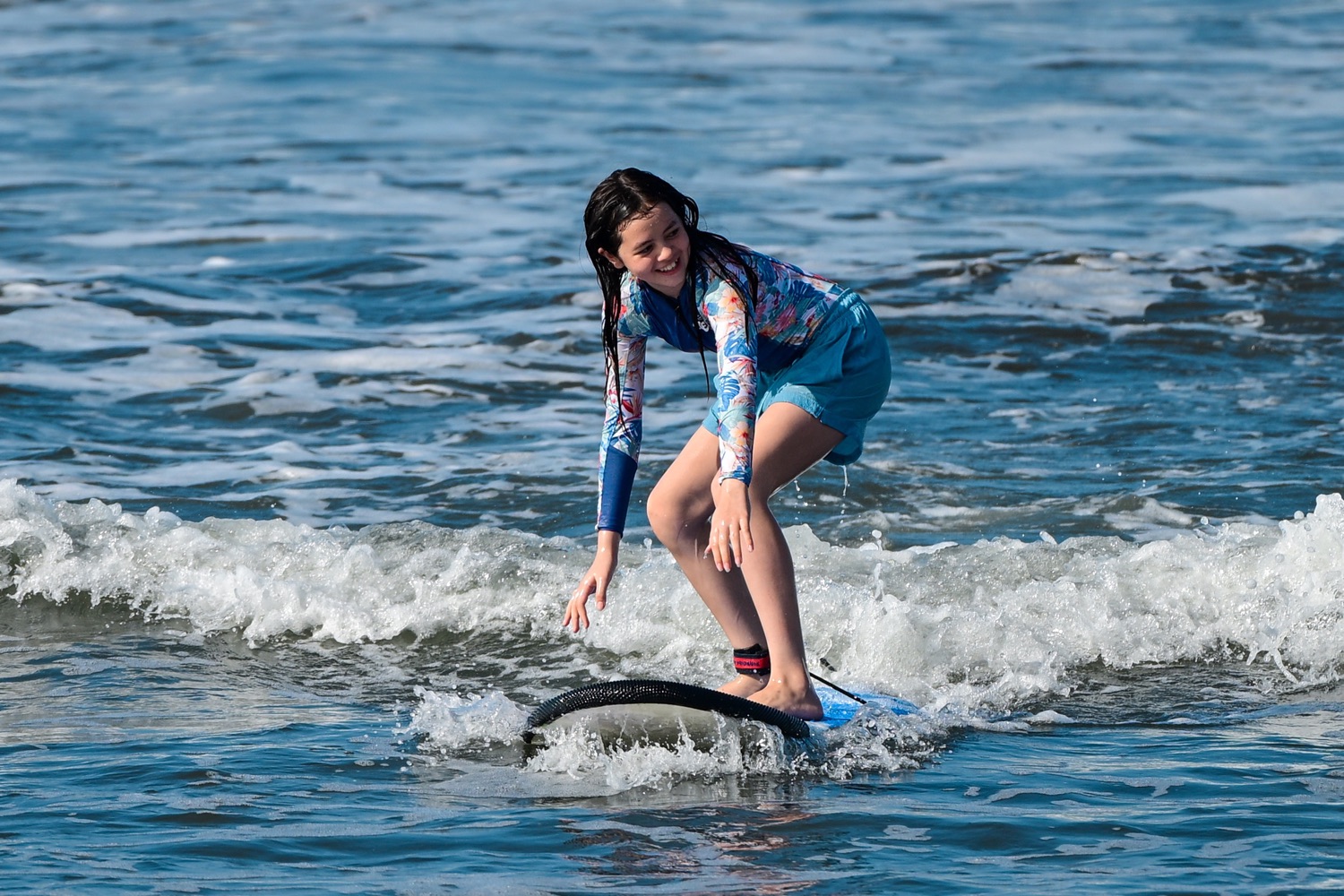
Medewi is a soft, rolling left that breaks over smooth boulders and runs for hundreds of metres. The inside, where we start, is shallow and gentle. The lineup is quiet, and since 2026 there are proper rules about who surfs where, so nobody is dropping in on beginners.
It is not that fear cannot find you here. It is that there is very little out there feeding it.
And if you have been stuck at the same level for years, it is worth asking honestly whether this is the reason. People rarely say I was frightened. They say the conditions were not good that day. We wrote about the other reasons surfers stop improving in why you stopped getting better, but this one belongs on the list too.
Quick answers
Is it normal to be scared of surfing?
Yes, and at every level. I have been. The surfers who get past it are the ones who went back small and soon, not the ones who felt nothing.
Should I tell my surf coach that I am frightened?
Please do, before the session rather than during it. It changes the whole plan, and it is the single most useful thing you can tell me.
What can I do after a bad experience in the water?
Go back sooner than you want to, in much smaller conditions, with somebody next to you. The longer you wait, the bigger it gets.
What if I do not want to stand up at all?
Then we do not stand up. Lying on the board in shallow water is a legitimate session, and sometimes it is the most useful one of the week.
Will one week be enough?
For some people it has been. For others it is the start. Either is fine, and I would rather tell you that honestly than promise you a week.
If any of this sounds like you, tell me before you book rather than on the morning. Write to us here or have a look at how I coach. We can go as slowly as you need.